
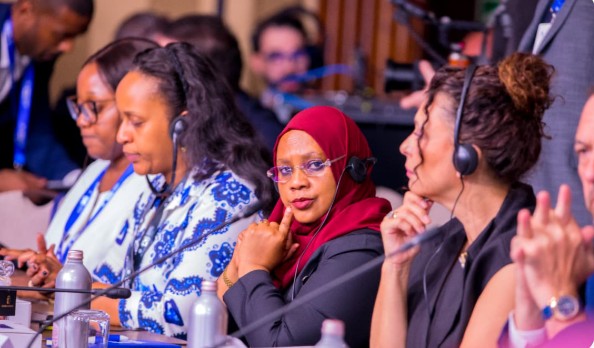
Minister Ashatu Kijaji Represents Tanzania at High-Level Global Tourism Summit in Toledo
Tanzania has reaffirmed its commitment to global tourism cooperation and sustainable sector development through its participation in the 126th Session of the Executive Council of the United Nations Tourism Organization (UN Tourism), held in Toledo, Spain.
The high-level international meeting brought together tourism ministers, ambassadors, and senior tourism leaders from 35 member states to discuss the future direction of global tourism under the organization's new leadership and to establish strategic priorities that will shape the sector over the next four years.
Representing Tanzania at the prestigious gathering was the Minister for Natural Resources and Tourism, Hon. Dr. Ashatu Kijaji, whose participation underscores Tanzania's growing influence within international tourism platforms and its commitment to advancing sustainable tourism development.
🌍 Global Tourism Leaders Chart a New Course for the Industry
The Executive Council meeting serves as one of the most important decision-making forums within UN Tourism, providing member states with an opportunity to contribute to policies and strategies that guide tourism development worldwide.
During the opening session, newly appointed UN Tourism Secretary-General Shaikha Nasser Al Nowais unveiled the organization's Management Vision for the period 2026–2029, outlining a comprehensive roadmap aimed at strengthening institutional effectiveness, improving governance, and delivering greater value to member states.
The vision focuses on building a stronger, more transparent, and results-oriented organization capable of responding to the evolving needs of the global tourism industry.
According to the Secretary-General, the future success of international tourism will depend on strong institutions, effective partnerships, innovation, and sustainable development practices.
📈 New Strategic Priorities for Global Tourism
Under the 2026–2029 framework, UN Tourism will be guided by three core principles:
- Building strong and resilient institutional foundations.
- Placing member states at the center of decision-making and implementation.
- Ensuring excellence and quality in service delivery.
In addition, four strategic priorities have been identified to guide the organization's work during the next four years:
1. Strong Foundations
Strengthening governance systems, financial discipline, transparency, and accountability to ensure effective institutional performance.
2. Partnerships
Expanding collaboration among governments, development partners, private sector stakeholders, and tourism organizations to accelerate growth and innovation.
3. Skills Development
Enhancing tourism education, professional training, workforce development, and capacity building to meet the changing demands of the global tourism market.
4. Sustainability
Promoting environmentally responsible tourism practices that balance economic growth with conservation and community development.
The Secretary-General emphasized that strong institutions remain the cornerstone of successful tourism development worldwide.
"No priority can be effectively achieved without transparent institutions, sound financial management, and robust accountability systems," she noted during the opening ceremony.
🏝️ Tourism Continues to Drive Global Economic Growth
Discussions at the Executive Council meeting highlighted tourism's critical contribution to the global economy.
According to UN Tourism leadership, the sector currently contributes approximately 10 percent of global Gross Domestic Product (GDP) and supports millions of jobs across developed and developing economies.
Tourism continues to play a vital role in promoting economic inclusion, supporting local businesses, generating foreign exchange earnings, and fostering cultural exchange between nations.
Delegates agreed that strengthening international cooperation will be essential for ensuring the industry's long-term resilience and sustainable growth.
Tanzania Reinforces Its International Tourism Presence
Tanzania's participation in the Executive Council meeting reflects the country's ongoing efforts to strengthen its visibility and influence within the global tourism community.
As one of Africa's leading tourism destinations, Tanzania continues to attract visitors through its diverse tourism offerings, including:
- Serengeti National Park and the Great Migration.
- Mount Kilimanjaro, Africa's highest peak.
- The Ngorongoro Conservation Area, a UNESCO World Heritage Site.
- Zanzibar's world-renowned beaches and cultural heritage.
- Rich wildlife, cultural tourism, adventure travel, and conservation experiences.
By actively participating in international tourism forums, Tanzania gains valuable opportunities to exchange knowledge, attract partnerships, and contribute to global discussions shaping the future of the industry.
🤝 Supporting Tanzania's Tourism Development Agenda
The country's engagement at the UN Tourism Executive Council aligns with broader national efforts to expand tourism's contribution to economic growth and sustainable development.
Under the leadership of President Dr. Samia Suluhu Hassan, Tanzania has intensified tourism promotion initiatives through international campaigns, strategic partnerships, infrastructure investments, and enhanced destination marketing.
These efforts have strengthened Tanzania's position as one of Africa's most competitive and attractive tourism destinations.
🌍 Looking Ahead
The 126th Session of the UN Tourism Executive Council, which concludes on June 11, 2026, is expected to generate important policy recommendations and strategic decisions that will influence the future of global tourism.
For Tanzania, participation in the meeting represents another step toward deepening international cooperation, attracting new opportunities, and ensuring that the country's tourism sector remains aligned with global trends and best practices.
As the global tourism industry enters a new chapter, Tanzania continues to demonstrate its commitment to sustainable growth, innovation, and active engagement in shaping the future of tourism worldwide.