
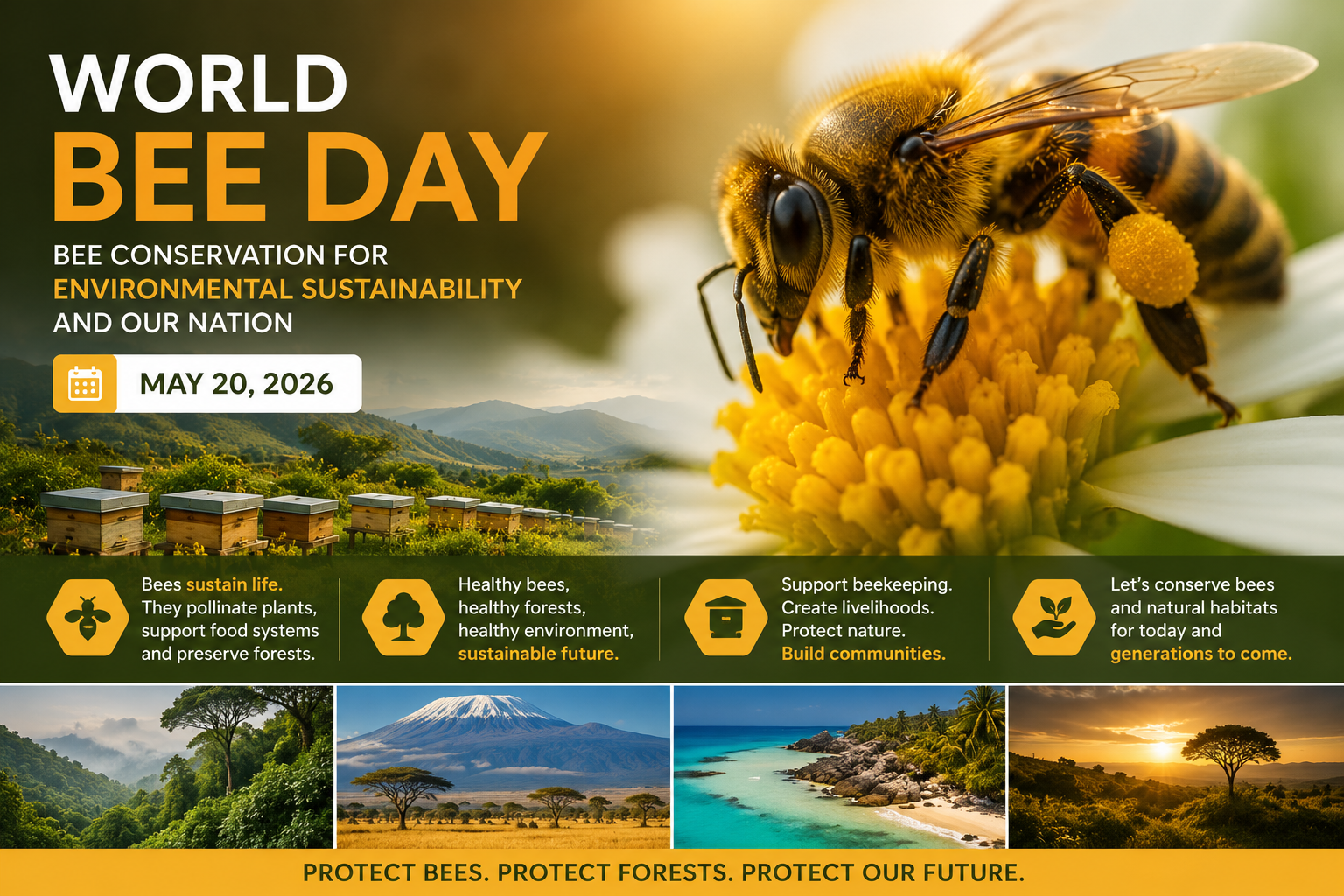
Dar es Salaam — Tanzania has joined the global community in commemorating World Bee Day 2026 with a renewed call for environmental conservation, biodiversity protection, and sustainable ecosystem management, recognizing the critical role bees play in maintaining healthy forests, food systems, and tourism landscapes.
The awareness campaign, led by Tanzania Forest Services Agency under the message “Bee Conservation for Environmental Sustainability and Our Nation,” highlights the growing importance of pollinators in supporting ecological balance and livelihoods across Tanzania.
Observed every year on May 20, World Bee Day aims to raise awareness about the importance of bees and other pollinators in preserving biodiversity, supporting agriculture, and sustaining natural ecosystems that are vital for both communities and tourism destinations.
In Tanzania, bees contribute significantly to forest conservation through pollination, helping maintain vegetation and wildlife habitats found in some of the country’s most iconic tourism attractions including Mount Kilimanjaro, Serengeti National Park, Ngorongoro Conservation Area, and the Eastern Arc mountain forests.
Environmental experts note that healthy bee populations are essential not only for agriculture and food production, but also for sustaining the natural beauty and biodiversity that make Tanzania one of Africa’s leading tourism destinations.
The campaign further emphasizes the connection between conservation and economic opportunities, particularly through sustainable beekeeping, eco-tourism, forest preservation, and community livelihoods.
Across various forest reserves and conservation areas, Tanzania has increasingly promoted beekeeping as an environmentally friendly economic activity that supports rural incomes while reducing destructive practices such as illegal logging and deforestation.
Tourism stakeholders say protecting pollinators and forest ecosystems directly contributes to preserving wildlife habitats, scenic landscapes, and nature-based tourism experiences that attract visitors from around the world.
As climate change and environmental degradation continue to threaten ecosystems globally, Tanzania is encouraging communities, institutions, and conservation partners to strengthen efforts aimed at protecting bees and natural habitats for future generations.
The World Bee Day message also aligns with Tanzania’s broader conservation agenda of promoting sustainable environmental management while positioning the country as a destination where nature, wildlife, and communities thrive together.
Through continued awareness, conservation partnerships, and community participation, Tanzania remains committed to safeguarding its forests and biodiversity — ensuring that both people and nature continue to benefit from the country’s rich ecological heritage.
Explore Tanzania’s natural and eco-tourism destinations here