
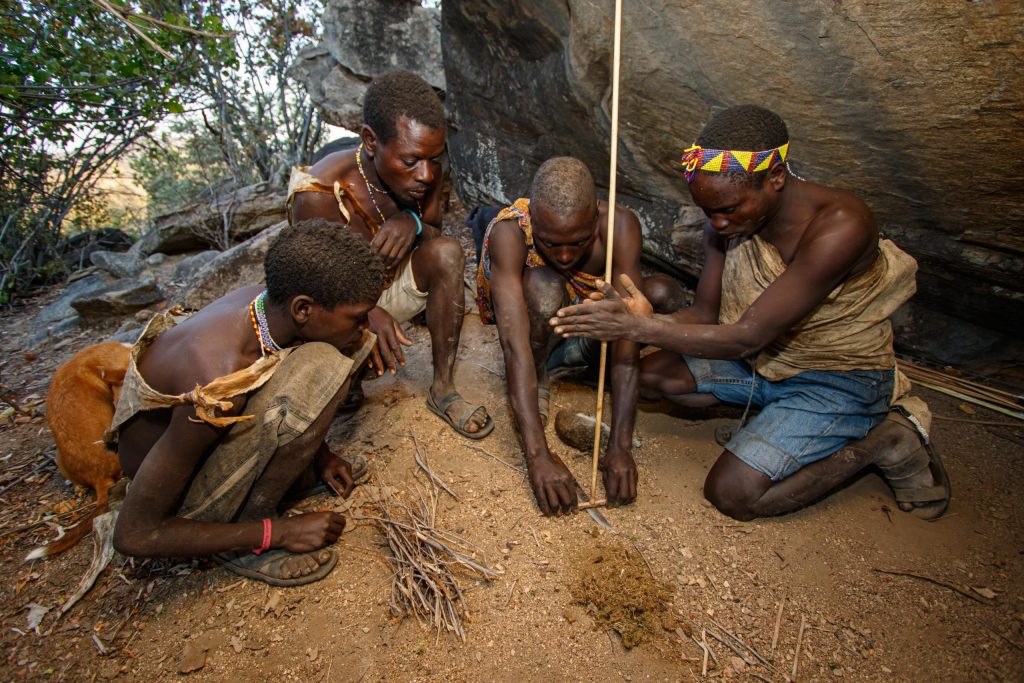
The Hadzabe (also spelled Hadza) are one of the last remaining hunter-gatherer communities in the world, living near Lake Eyasi in northern Tanzania. Their traditional lifestyle has remained largely unchanged for thousands of years, offering a unique glimpse into human history and cultural diversity.
Unlike agricultural or pastoral societies, the Hadzabe rely on hunting, gathering wild fruits, and collecting honey for sustenance. Men typically hunt small game using bows and arrows, while women gather edible plants and berries. This sustainable way of life reflects deep knowledge of the natural environment and resource conservation.
Visitors to Hadzabe communities can experience cultural tours that showcase traditional skills and daily life. Guided interactions allow travelers to learn about hunting techniques, storytelling, and the Hadzabe’s relationship with nature. These experiences promote cultural understanding and support local livelihoods through responsible tourism.
The Hadzabe language is unique and unrelated to neighboring languages, highlighting the tribe’s distinct cultural identity. Their oral traditions and social structures provide valuable insights into human diversity and the importance of preserving indigenous heritage.
Cultural tourism with the Hadzabe emphasizes respect and ethical engagement. Responsible travel ensures that interactions benefit local communities while safeguarding traditions and cultural integrity.
For travelers interested in anthropology and cultural discovery, the Hadzabe offer an extraordinary opportunity to connect with one of humanity’s oldest living cultures.
All images courtesy of Tanzania Tourist Board (TTB).