
By GoTanzania Editorial Team
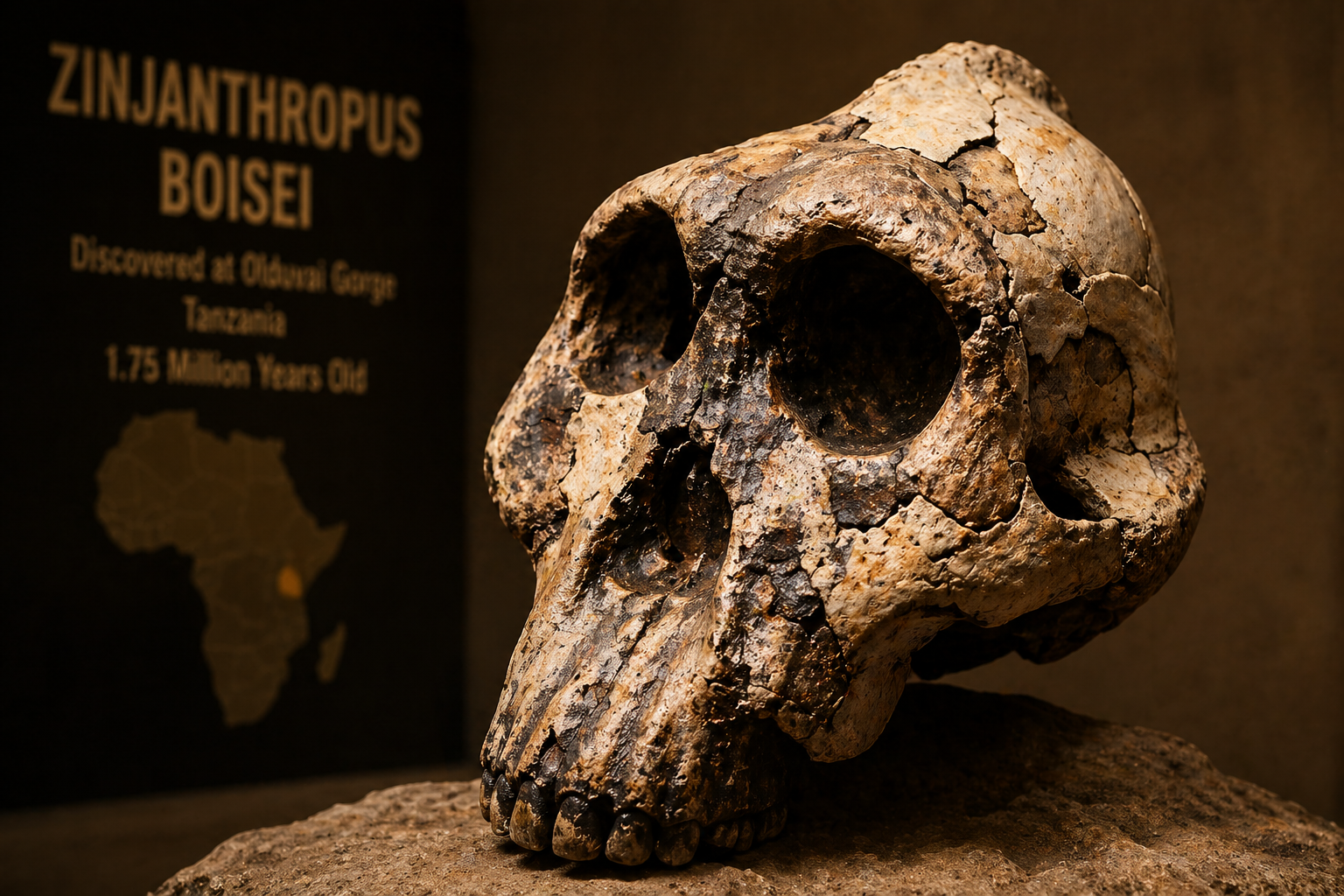
Tanzania’s remarkable contribution to the story of human evolution continues to captivate the world, with one of the most important fossil discoveries in history—Zinjanthropus boisei—placing the country at the center of global paleoanthropological research.
Discovered in the iconic Olduvai Gorge within the Ngorongoro Conservation Area, the fossilized skull of Zinjanthropus remains one of the most celebrated findings in the scientific world and a major tourism attraction for visitors interested in history, archaeology and the origins of mankind.
The phrase “Zinjanthropus is ours and we are proud to share him with the world” reflects Tanzania’s pride in preserving and promoting this extraordinary heritage.
A Discovery That Changed Human History
Zinjanthropus was discovered on July 17, 1959, by renowned British paleoanthropologist Mary Leakey during excavations at Olduvai Gorge.
Estimated to be around 1.75 million years old, the fossil was initially named Zinjanthropus boisei:
- “Zinj” is derived from an old Arabic term referring to East Africa or “land of the black people.”
- “Anthropus” means human.
- Together, the nickname symbolized the “Man of East Africa.”
Later scientific classification placed the fossil under the genus Paranthropus boisei, but “Zinj” remains its globally recognized nickname.
This groundbreaking discovery transformed Olduvai Gorge into one of the world’s most important archaeological and paleoanthropological sites, attracting researchers, students and tourists from across the globe.
UNESCO World Heritage and Global Recognition
The discovery elevated the status of the Ngorongoro Conservation Area, which is now recognized as a UNESCO World Heritage Site for both its natural and cultural significance.
Recently, the Commissioner for Conservation of the Ngorongoro Conservation Area Authority (NCAA), Abdul-Razak Badru, met with Tanzania’s UNESCO Ambassador and Permanent Delegate, Professor Mahamis Maleko, to discuss strengthening international collaboration in research and conservation efforts.
The meeting also included Professor Charles Musiba, a globally respected Tanzanian scientist known for his research on human origins and his contributions to the study of Zinjanthropus and Olduvai Gorge.
Why Zinjanthropus Matters Today
The discovery of Zinjanthropus was not only a milestone in science but also a turning point for Tanzania’s tourism and education sectors.
In 1970, Tanzania honored the fossil’s significance by featuring its image on postage stamps during the EXPO Osaka world fair in Japan—further promoting the country’s heritage internationally.
Today, ongoing research continues to uncover more evidence about ancient human life, evolution and migration patterns.
For Tanzanian students and scholars, Olduvai Gorge serves as an open classroom and research hub, with many local and international students pursuing advanced studies in archaeology, anthropology and paleontology.
A Must-Visit Destination for Heritage Tourism
Tourists visiting Ngorongoro can combine wildlife safaris with an educational journey through the “Cradle of Mankind.”
A visit to Olduvai Gorge offers:
- Guided tours through excavation sites
- Museum exhibits showcasing ancient fossils
- Educational insights into human evolution
- Stunning views of the Great Rift Valley landscape
As Tanzania continues promoting cultural and historical tourism, Zinjanthropus remains one of the nation’s proudest symbols of its contribution to world history.
Click here for Ngorongoro safari packages and explore where the story of mankind began.
Credit : Ngorongoro Conservation Area Authority (NCAA)