
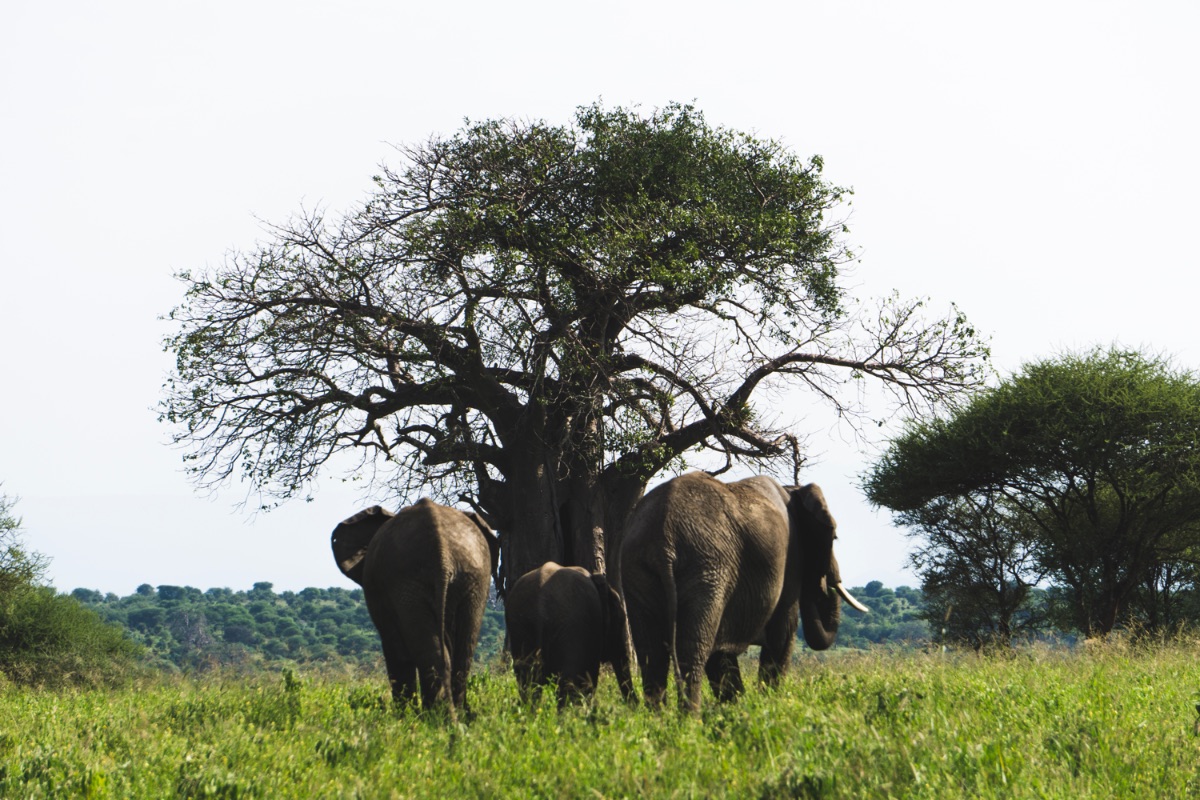
Baobab trees are among the most recognizable and iconic features of Tanzania’s landscapes. Often called the “Tree of Life,” these ancient trees are known for their massive trunks, long lifespans, and ability to survive in harsh environments. They play a vital ecological role and are deeply connected to local culture and wildlife.
Baobabs are commonly found in safari destinations such as Serengeti and Tarangire, where their distinctive shapes create stunning photographic scenes against the African sky. In Tarangire National Park, baobab trees dot the savannah, standing as silent witnesses to the movement of elephants and other wildlife. Elephants are known to strip bark from baobabs during dry seasons, which helps shape the trees’ ecological interactions.
Beyond their visual beauty, baobabs provide food and resources. Their fruit, known as baobab fruit, is rich in vitamin C and nutrients and is used in local diets and health products. The tree’s hollow trunks have historically served as shelters and storage spaces for communities, highlighting its practical importance.
Baobabs also symbolize resilience and longevity. Some trees are thousands of years old, surviving extreme climatic conditions while continuing to support ecosystems. Birds, insects, and small animals use baobabs as habitats, making them essential components of Tanzania’s biodiversity.
For travelers and photographers, baobab trees add a dramatic and timeless quality to safari landscapes. Their unique shapes and silhouettes create unforgettable images and remind visitors of Africa’s natural wonders.