
By GoTanzania Editorial Team
In the heart of northern Tanzania, where wildlife, culture and history blend into one of Africa’s most remarkable destinations, an ancient human burial tradition continues to live on among indigenous communities residing within the world-renowned Ngorongoro Conservation Area.
The Ngorongoro Conservation Area, globally celebrated for its breathtaking landscapes, wildlife safaris and the iconic Ngorongoro Crater, is also home to rich cultural heritage that has been preserved for generations by local tribes including the Maasai, Datoga, and Hadzabe.
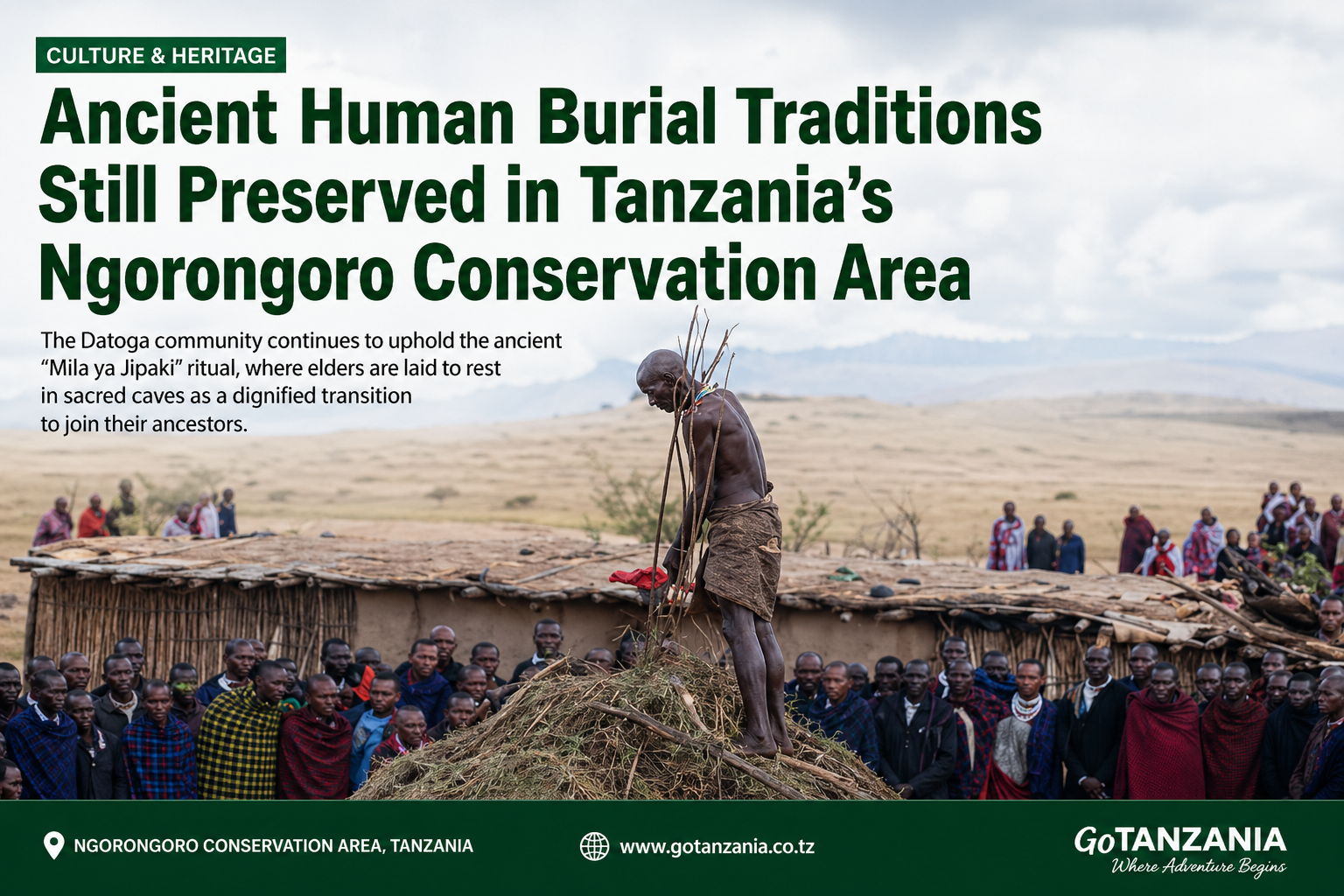
Among the most unique traditions still practiced in the area is an ancient burial ritual known as “Mila ya Jipaki”, a custom where elderly members of the community are laid to rest in a sacred circular cave rather than being buried underground.
According to local cultural narratives shared within the conservation area, the Datoga community in Ngorongoro has upheld this practice for centuries. The ritual is specifically reserved for elderly people believed to have lived honorable and meaningful lives within the community.
The Sacred Ritual of “Mila ya Jipaki”
In Datoga culture, when a person reaches an advanced age—traditionally around 51 years and above, though some elders may be considered earlier depending on health and social standing—they may be prepared for this sacred farewell ceremony.
The selected elder is taken to a specially designated circular cave, where they are laid gently on one side. Family members and community elders gather for final blessings and prayers before leaving the individual inside the cave.
Once placed there, the elder remains in the cave for approximately 40 days to six months, depending on circumstances and the progression of life. During this period, food and care may be provided initially, but eventually the elder is left in peace to await their natural passing.
The belief behind the ritual is deeply spiritual. Community members consider this process a dignified transition from the physical world to the ancestral realm. It is believed that once the elder dies, they join the ancestors and continue to watch over and protect their descendants.
Reserved for the Respected
This traditional practice is not applied to everyone. It is reserved for individuals considered wise, respected and spiritually significant within the community.
For women in the Datoga community, the ritual is typically performed only if the woman has reached the age of 50 or above and meets specific cultural qualifications.
The continuation of such traditions highlights the deep-rooted cultural identity of communities living within Ngorongoro, where heritage is protected alongside nature and wildlife.
Ngorongoro: More Than Wildlife
While many visitors travel to Ngorongoro for its spectacular game drives and the chance to see the Big Five, the conservation area offers much more than wildlife. It is a living cultural landscape where visitors can explore indigenous traditions, ancient ways of life, and human history dating back thousands of years.
Ngorongoro is also home to the famous Olduvai Gorge, often referred to as the “Cradle of Mankind,” where some of the earliest evidence of human evolution was discovered.
For cultural tourism enthusiasts, visiting Ngorongoro provides a rare opportunity to experience authentic traditions, storytelling, traditional dances, and historical narratives that continue to shape Tanzania’s identity.
As Tanzania strengthens its position as one of Africa’s leading tourism destinations, stories like these showcase the country’s unmatched ability to offer visitors not only unforgettable wildlife encounters but also rich and authentic cultural experiences.
Photo: Courtesy of Ngorongoro Conservation Area Authority (NCAA)